60 Amp to 100 Amp Electrical Panel Upgrade in Ontario
 Written by Panel Quotes |
November 2026
- Key Takeaways
- What Is Involved in a 60 Amp to 100 Amp Panel Upgrade
- What Your 100 Amp Panel and Service Upgrade Could Involve
- How to Tell if Your House Is Still on 60-Amp Service
- Electrical Load: When Do You Need 100 Amps?
- When Upgrading to 200 Amps Might Be the Better Choice
- Panel Replacement or Full Service Upgrade
- How Licensed Electricians Evaluate the Existing Service
- Inspections, Coordination with Utility Company and Electrical Permits
- Cost to Upgrade from 60 Amp to 100 Amp & Key Cost Factors
- Project Schedule, Installation Day & Temporary Power Outage
- How to Get Ready for an Estimate for a 100 Amp Upgrade
- The Necessity of Professional Electrical Service Work
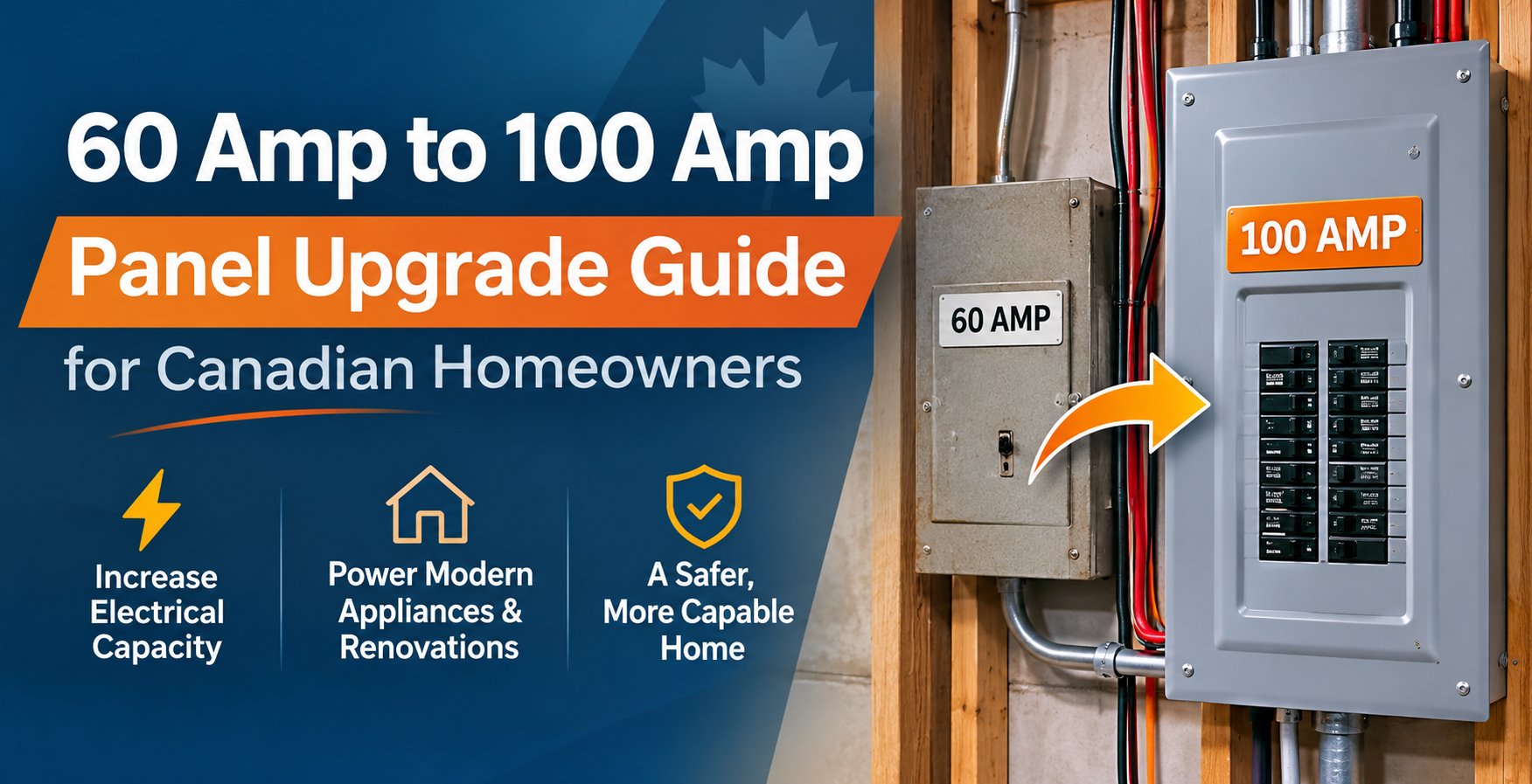
Upgrading from a 60-amp to 100-amp panel can give an older Canadian home the electrical capacity it needs for modern appliances, renovations, or that hot tub you've been dreaming about.
Here’s what the work might entail, how to check if you still have 60-amp service, and when it makes sense to plan for an upgrade.
Key Takeaways
- A 60-amp to 100-amp upgrade might include service entrance equipment, a meter base, as well as a main disconnect and panel, not just breakers.
- Begin with a formal load calculation; load management or efficiency upgrades can prevent a service replacement.
- In Ontario, service changes usually require notifying the ESA, disconnecting utilities, and completing an inspection before reconnection.
- Frequent tripping, blown fuses, dimming lights, or warm panel parts demand immediate evaluation by an electrician or electrical expert.
- Plan circuits for the future for renovations, workshops, electric heating, kitchens, and other major electrical loads.
- Electric heating and heat pumps can go over 100 amps; many all-electric heat pumps generally require a 200-amp service.
What Is Involved in a 60 Amp to 100 Amp Panel Upgrade
Going from a 60-amp to a 100-amp panel is more than just swapping out an old breaker box. An amp upgrade increases the home's electrical service capacity, allowing more power for lighting, appliances, and newer electrical loads at the same time. A qualified electrical contractor will start with a load calculation to determine whether the upgrade is warranted. In some homes, load management or efficiency upgrades can free up enough capacity without changing the service. If a service upgrade is required, work may involve the panel and equipment associated with the changes. In Ontario, electrical work generally requires notifying the Electrical Safety Authority before work starts, and service changes require utility disconnection and inspection before power is restored. The result is a safer, more capable platform to pave the way for your household improvements, not just more amps on a label.
What Your 100 Amp Panel and Service Upgrade Could Involve
A 100-amp panel upgrade isn't just a new electrical panel; it may include service equipment to match the panel’s capacity, plus protection and access to a new electrical project in the home.
Service entrance, meter equipment, and main disconnects
A service upgrade can involve the equipment that brings utility power into the home, like the meter equipment and the main disconnect, not just replacing a 100-amp panel. The required work depends on the existing service, the proposed load, and the utility requirements. In Ontario, any change to service equipment requires a utility disconnect followed by an inspection before power can be restored. This ensures safety for all involved.
Before you build a larger electrical system, have a licensed contractor evaluate the load you’ve calculated. Depending on available capacity, you may be able to add a new load to a 100-amp service without an upgrade.
Grounding, bonding, and room for future circuits
Modern panels should primarily accommodate a clean, practical layout and the circuits you need today. Your electrician can review grounding and bonding provisions and ensure the panel arrangement will support electrical safety practices as the work progresses. It’s particularly helpful to have space for future circuits if you are going to pursue renovations, add kitchen equipment, build a workshop, or switch to electric heating.
That’s why planning is so important. Major new loads can change the equation. Switching from gas or oil heat to electric heat may require an electrical panel upgrade.
How to Tell if Your House Is Still on 60-Amp Service
A modest amp service is easy to ignore until modern appliances push a panel to its limits. A qualified assessment is the reliable way to understand how much power your home can safely support, but a quick visual review can give useful clues.
Older panels, fuse gear and common overload symptoms
Look for an older electrical panel with screw-in fuses, a small main disconnect, or limited room for circuits as signs of an original, lower-capacity installation. Don't guess if you have repeatedly blown fuses, tripped breakers, dimming lights when major appliances kick on, or warm panel components. Have it checked out right away. Check the main switch size on the panel label; this will help determine the service threshold. Toronto Hydro recommends keeping the maximum load at 80% of the main switch size. A licensed electrical contractor can determine whether the equipment and available capacity safely meet your household’s current demand.
Warning Signs Panel
- Older, lower-capacity installations may include screw-in fuses, a small main disconnect, or few circuit spaces.
- Note any blown fuses or tripped breakers, especially if they are the same appliances or circuits.
- Watch for lights that flicker when you turn on large appliances, which can indicate heavy demand or limited service capacity.
- If panel covers, switches, breakers, or fuse holders are warm, treat it as urgent and have a professional assess it.
- Check the panel label to confirm the main switch rating and any electrical service limitations.
- According to Toronto Hydro, keep the maximum household load at or below 80% of the main switch size.
- Have a licensed electrical contractor evaluate panel condition, available capacity, and upgrade needs.
Electrical Load: When Do You Need 100 Amps?
A 100-amp service can still serve a modest household, but capacity depends on a formal electrical load calculation, not appearance. The question is whether the projected electrical load, including the new equipment, can be safely accommodated at the same peak demand.
Loads that alter the calculation
Major additions can quickly change a home's electrical load profile. For example, going from gas or oil heat to electric heat might require a panel upgrade. All-electric air-source and ground-source heat pumps usually require 200 amp service. A solar installation doesn't automatically require a larger service, but the equipment and the home’s existing and planned loads should be reviewed together. An electrical contractor can use the approved local formula to determine available capacity, often determining whether load management or efficiency measures can avoid an unnecessary upgrade.
How Big Home Changes Affect Electrical Service Needs
| Home improvement | Potential service impact | Recommended next step |
|---|---|---|
| Conversion from gas or oil heating to electric heat | May require a panel upgrade because it can substantially change the home’s load profile. | Calculate available capacity using the approved local formula. |
| All-electric air-source heat pump | Normally calls for 200 amp service. | Review existing and planned household loads to determine available capacity. |
| All-electric ground-source heat pump | Normally calls for 200 amp service. | Review existing and planned household loads to determine available capacity. |
| Solar installation | Does not automatically require larger service. | Review solar equipment together with the home’s existing and planned loads; assess whether load management or efficiency measures can avoid an upgrade. |
When Upgrading to 200 Amps Might Be the Better Choice
Upgrading from a 100-amp service isn't a knee-jerk response to every renovation or new appliance. First, a qualified electrical contractor should do a load calculation. Sometimes, the available capacity can handle a new circuit without upgrading the service. Load-management choices may prevent bigger upgrades. However, when a home is about to undergo serious electrification, 200 amps is usually the wiser choice. Most all-electric air-source or ground-source heat pumps require 200-amp electrical service. If you’re switching from gas or oil heat to electric heat, you may also need a panel upgrade. When calculations show it, early planning is recommended, as service upgrades require notification to the Electrical Safety Authority, utility coordination, disconnection, and inspection before power can be restored.
Panel Replacement or Full Service Upgrade
You can upgrade a panel to replace an old, packed, or insufficient breaker panel while keeping the home’s current electrical service capacity. A proper scope can be this if the load calculation shows the capacity is sufficient for the planned circuits, even with additions like an appliance or heat pump. A full service upgrade comprises more than the panel in the house. This means changing the property's electrical capacity. This often includes the meter, service equipment, and utility coordination. Hydro One service upgrade work is defined as an amperage increase, meter relocation, or added service. This matters for budgeting and scheduling. Service changes require an inspection, as well as a utility disconnect before power can be restored. Further, electrical work generally requires an ESA notification before it can start. A good assessment starts with current and projected electrical load, not just the panel's appearance.
How Licensed Electricians Evaluate the Existing Service
Electricians start by assessing your home’s electrical system, including service rating, panel condition, circuits, and the home's electrical capacity. That assessment shows whether you can safely add more equipment or if you need a larger service.
Why you should always do a site review before quoting on upgrades
The best estimate starts at the site, not from a picture of a panel. The electrician inspects the existing system, determines the major present and proposed loads, and uses the locally approved method of load calculation. This calculation may reveal that capacity still exists for the proposed work, avoiding unnecessary upgrade costs. It also highlights other cost factors beyond amperage, such as service condition and utility coordination requirements. For service upgrades, moves, or replacements, the utility will disconnect power and will require an inspection before restoring power. A detailed review gives the homeowner a definitive plan, not a tentative number that changes once work begins.
Inspections, Coordination with Utility Company and Electrical Permits
You can't just decide to use a bigger electrical panel for electrical work. Timely completion of the required administrative tasks is vital: electrical permits, inspections, and utility company scheduling can determine when a project can safely move forward. In the province of Ontario, nearly all electrical work must be reported to the Electrical Safety Authority by submitting a notification of work (often called a permit) before work begins. When a service is upgraded, relocated, or replaced, the utility company typically must disconnect power, and an inspection is required before restoring power. A qualified contractor can coordinate the paperwork, inspection timing, and utility requirements, and verify whether the proposed service size is needed or just assumed.
Cost to Upgrade from 60 Amp to 100 Amp & Key Cost Factors
Upgrading costs vary because a service change is beyond just a new rating on a label. The final upgrade cost includes equipment, labour, approvals, and site-specific installation required to provide safe, usable capacity.
Equipment, Access & Corrective Work Affecting the Quote
A good quote should include the new electrical panel and the condition of the existing service, not just the advertised panel capacity. Difficult access to the meter or panel, an unsuitable location, and corrective work found during installation can affect the scope. A licensed contractor should also determine the home’s actual electrical load, since the available capacity may be enough to accommodate a planned addition without a complete service upgrade.
In Ontario, service upgrades need a utility disconnect and inspection before power can be restored. Electrical work generally requires notifying the ESA. Meeting these compliance-related and coordination steps is important for comparing scope and price.
Quote scope checklist
- Make sure the quote includes a new panel, service equipment, breakers, grounding, and all necessary connections.
- Request an on-site review of meter access, panel location, clearances, and any difficult routing or excavation that could be required.
- Instead of assuming a full service upgrade is needed, you are advised to get a load calculation from a licensed contractor.
- Determine any necessary corrective action for damaged wiring, obsolete equipment, or code deficiencies observed during installation.
- Make sure the scope includes utility disconnect coordination, Electrical Safety Authority notification, thorough inspection, and arrangements for power restoration.
- Compare written scopes for each line. In the comparison, include allowances, exclusions, permit fees, and potential change order conditions.
Project Schedule, Installation Day & Temporary Power Outage
A service panel upgrade usually entails more than just the electrician showing up. The upgrade can involve permits, utility coordination, and inspection. In Ontario, most electrical work must be reported to the Electrical Safety Authority before it starts, and a service upgrade requires a utility disconnect and then inspection before power can be turned back on. Your contractor should not confirm the installation date until the required notification, utility request, and equipment availability are in place. You will lose power briefly while the old service equipment is removed and the new service is installed. To prepare for this loss of power, ensure that phones are charged, arrange refrigeration for sensitive items, and avoid scheduling work calls that depend on home internet. A well-thought-out upgrade plan considers these practicalities early to reduce disruption in your home.
How to Get Ready for an Estimate for a 100 Amp Upgrade
A good estimate starts with a clear understanding of your home's electrical demand, not just the panel size. List planned additions such as EV charging, electric heating, a renovated kitchen, or workshop equipment, as well as major existing appliances. Share recent electrical usage records, and advise whether you are replacing a panel, moving the meter, or increasing service capacity, as all will affect the scope. An electrical contractor can determine the load and whether a 100 amp service has enough capacity left, or whether load management or efficiency measures could avoid a larger upgrade. In Ontario, electrical work typically requires a notice of work prior to the onset of the project, and a service upgrade requires utility disconnection and inspection before power can be restored. Asking early about these details will help you get a clearer estimate.
The Necessity of Professional Electrical Service Work
Electrical service work isn’t only about adding capacity or swapping out an old panel. It covers electrical safety throughout your entire home and property, from major load calculations to the utility connection. Experienced commercial electricians will review the existing service, anticipated demand, equipment condition, and applicable requirements to determine the best way forward. That thorough approach may prevent an unnecessary upgrade: a good load calculation may show there is still capacity for a new load, or that load management or efficiency improvements are a better fit. When an upgrade is warranted, a coordinated professional approach protects the schedule and the installation. In Ontario, for example, utilities are required to disconnect power and complete inspections before restoring service after an upgrade. The result is safe, compliant electrical work that meets the home's needs.